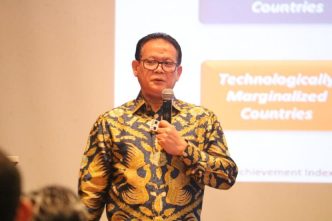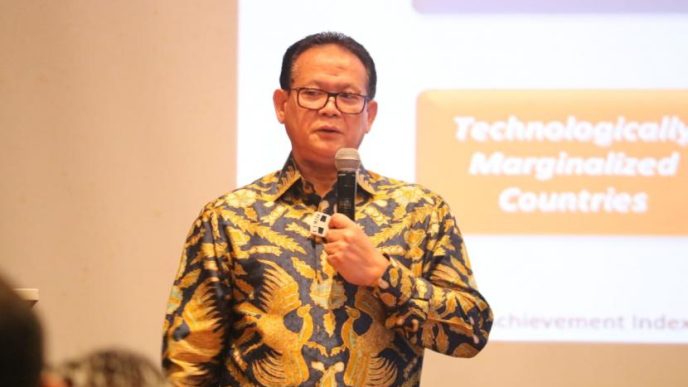
Ikhbar.com: Digital governance is critical to ensuring that Indonesia’s “Golden Indonesia 2045” vision does not remain a slogan, Prof. Rokhmin Dahuri said on Saturday.
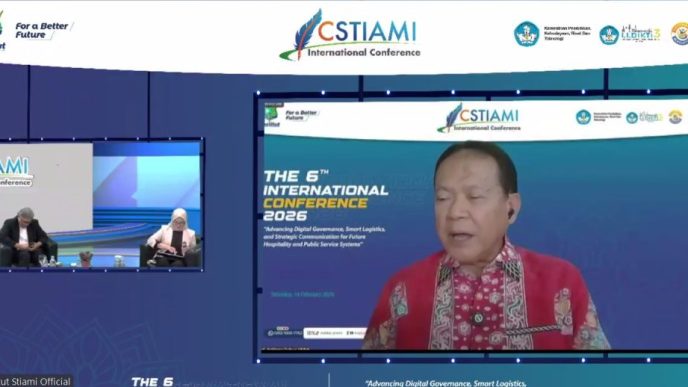
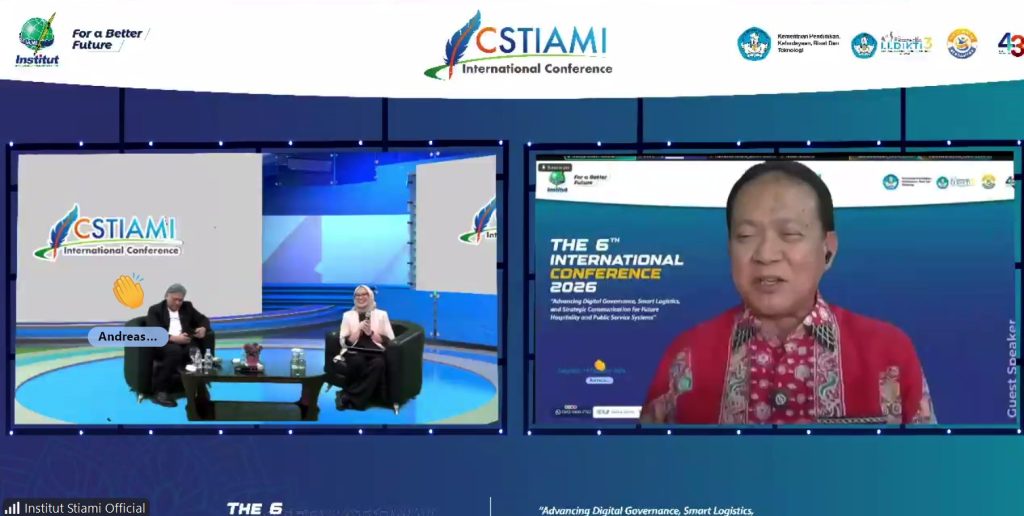
The rector of the UMMI University Bogor, West Java, delivered the remarks at an international seminar titled “Advancing Digital Governance, Smart Logistics, and Strategic Communication for Future Hospitality and Public Service Systems,” hosted by the STIAMI Institute of Social Sciences and Management in Jakarta.
Addressing academics from several countries — including Dr. Tasente Tanase of Ovidius University of Constanța, Romania; Prof. Kim Soo Il, emeritus professor at Busan University of Foreign Studies in South Korea; and Prof. Ilham Sentosa, senior lecturer at Universiti Kuala Lumpur (UniKL) — Rokhmin said the quality of state governance determines national competitiveness. Without digital-based government reform, he said, Indonesia’s ambition to become a high-income developed country will be difficult to achieve. 
“Digital governance is not merely about shifting manual services to digital platforms. It is about redesigning the architecture of government to make it more transparent, more accountable, more responsive, and more citizen-oriented,” Rokhmin said.
[Indonesian Version] Prof. Rokhmin: Digital Governance Fondasi Indonesia Emas 2045
Rokhmin, who is also a member of Commission IV of the House of Representatives (DPR), said a well-designed digital government can curb corruption, reduce bureaucratic barriers, and strengthen data- and science-driven policymaking. Such systems, he added, enable public services to reach remote regions more equitably.
He cautioned, however, that technology alone is insufficient. An integrated data ecosystem, robust cybersecurity framework, adaptive regulations, and stronger human resources are essential components.
Rokhmin also referred to Indonesia’s performance in the United Nations E-Government Survey 2024, which ranked the country 64th out of 193 member states, up 13 places from 2022. While describing the improvement as progress, he said it remains disproportionate to the complexity of Indonesia’s national administration.
“Without strong digital governance, the Golden Indonesia 2045 agenda risks uneven implementation and limited long-term impact,” said Rokhmin, who served as minister of marine affairs and fisheries from 2001 to 2004.
He highlighted the role of universities as centers of innovation and producers of scientific research that support planning and public policy.
“If we want world-class government, we must first build world-class knowledge institutions,” he said.
Read: Rokhmin Calls for Digital Transformation in Talks with European and Asian Academics
Indonesia had more than 4,800 higher education institutions as of 2025, he noted, calling it a significant resource for producing digital governance talent, policy analysts, and technology-based public service designers. The government’s Digital Talent Scholarship program, which has trained hundreds of thousands of participants, has helped strengthen the capacity of civil servants, he added.
Rokhmin also said Indonesia’s demographic dividend from 2020 to 2038 will yield benefits only if supported by adequate nutrition, health care, education, skills development, work ethic, and strong character.
“Technology does not transform a nation; people do,” he said.